Saturday, 25 February 2012

Wknd 25-26 February

Went looking for the Greylags Saturday morning for the goose survey but got very few, just 45 East Fortune ponds and 6 at Lochhouses. Better success on Whoopers, 255 split btwn East Fenton (on water, also at grain and potatoes), Chapel (on grass) and Prora (at potatoes on landfill), 49 juvs = 19.3%; after over an hour and seeing 50+ bare legs was getting frustrated on darvics but then got a purple patch with 6 amongst only 25-30 birds on East Fenton bank, yellow PL5, UH3, X6C, 46I and X4R (first 3 are old timers, last 2 are new); plus a red darvic starting A. Red darvics with white engraved letters very hard to read when muddy! PL5, 46I (centre) and X4R shown below. [Postscript - turns out 46I is a very interesting bird, female cygnet ringed at Jokuldalsheidi, Iceland, August 2003 and present there as an adult in August 2006, but wintering in Co. Cork and Waterford the last 3 winters.]

After a few circuits in search of geese came upon a flock of gulls in field by Needless at Athelstaneford (c. 300 HG with an ad graellsii LBB) scanned for white-wings and found a darker yellow-legged bird, possible adult YLG! Could not stay to get any better photos though, only these poor ones, which, needless to say, will not be good enough, critically none of the spread wing. Compare also the last candidate in this area (c. 2 miles NNW), last June.

Dusk Saturday checked Gosford for Greylags coming in to roost, negative; went down towards the village and finally spotted some in field east of the Bothy, just 10 and no signs of moving to roost by 18:00hrs. In same field a large flock of corvids, been fooled by these before (we still need Rook for NT47U in atlas), they were in fact 255 Carrion Crows all doing very little sitting around and gathered in presumed pre-roost before going into woods. Adding the 15+ at the Gosford Sands burn/pipe at 18:15hrs (and still no geese) this is a sizeable roost, 270+ [possibly highest Lothian count since 316 S to roost at Aberlady 5/12/96].

Sunday - family excursion to Pressmennan, atlas roving en route. This very dark Buzzard at Whittingehame, looked black at a distance but bulk gave it away as a Buzzard. Expected species with 2 Jays, Treecreepers, Siskin etc. On the lake, 9 Goldeneye and a few other duck, but only atlas tick was a Woodpigeon "used nest" so clearly a well covered tetrad. No sign of yesterday's gull in Athelstaneford area, though with the flocks being so transient following food had no great expectation it would be. Another that "got away" :(

Back to Friday afternoon, quick look from Seton harbour, 187+ Velvet Scoter on sea (including 95 ad m, 14 f, 2 imm m) mainly off the harbour and NE in Gosford Bay; surprised to see a hooded white-winged gull heading in towards Seton from offshore, an adult Med; the bird did not stop at Seton burn but proceeded NE in great loops, perhaps response to the brisk wind, followed it as far as Gosford entrance where seemed to come down in the corner east of the gatehouse (tetrad tick for NT47P).

Thursday - 110 Pinks N over central Edinburgh in the morning.

Finally - pr Nutch reported still attending peanut feeder on Douglas Road, Longniddry - hopes now of local breeding?

Saturday, 18 February 2012

Wknd 18-19 February

After struggling with the Pinkfoot collar and Whooper darvics last week went back to try again; no joy with the two red darvics seen previously at Prora, and despite an earlier start in hope of less mud on rings they were no better, see below for example of the new "all black" darvics (this one is actually yellow!). Partial success with one new ring, above, initially totally illegible with wet mud but within a minute had dried in the brisk breeze to reveal code 4*I, will need to see again to confirm (later confirmed as 46I).


Nearby, the East Fortune geese were tucked in by the railway on low-lying ground east of Congalton Gardens - 950+ Pinks, 200+ Greylag, 15+ ad Euro Whitefronts, 5 tundra Beans (feeding together, above, some others unconfirmed), 3+ Barnacle Geese.

Also at Prora excellent views of a flock of corvids enabled checking for Nordic Jackdaw; in 210 birds not one had any obvious white collar, though two had leucistic bits in plumage, most obviously on this bird.

Finally had a look at Seton roost, having failed to detected anything other than the regular ad LBB in quick look at dusk on Friday; c. 3100 small gulls on shore, many hidden crouching amongst Long Craigs rocks due to the strong wind; eventually 3 ad Meds showed, the first with a white forehead on an otherwise full jet black hood, second with a mask and band over rear crown, final bird with just a mask; also one 1st-win Med, first here for quite a while; large gulls were only 40 Herring and 1 GBB, lack of LBB also first for a long time.

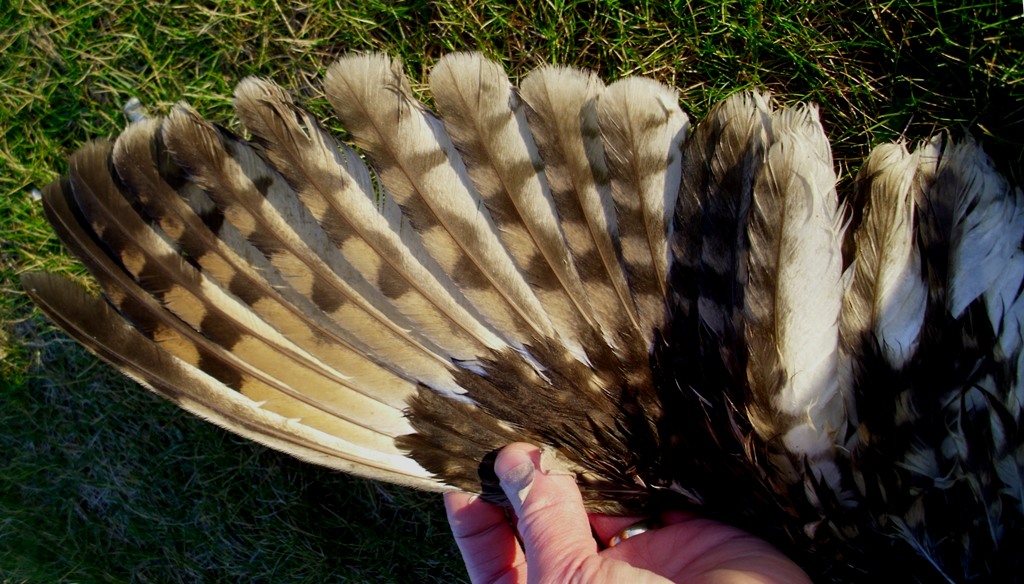
To complete the set of species groups usually featured on this blog (swans, geese, gulls and dead owls, repetitive isn't it!) a beautiful rufous specimen of a Tawny Owl recovered from the A1 Wallyford junction. The wavy bar on the flight feather tips confirms age as a juvenile. This is an atlas tetrad tick (we are including these post BTO atlas).

Sunday - did swan darvics at St Margaret's Loch, also a nice drake Pochard there in the bread melee and a very pale backed ad graellsii LBB. Later found over a thousand medium-large gulls (Herring and Common) up at the lamb fields at Penston, perhaps attracted by the lines of turnips laid out as feed. Apart from a few BHG, no other species apparent. Finally back to the Seton roost where numbers were lower and nothing of great interest apparent, ad graellsii LBB had returned. Seton harbour held 80 odd Herrings and a few GBB well after sunset, and another went over our house c. 18:10hrs.

Sunday, 12 February 2012

Wknd 11-12 February


With Lothian Iceland Gulls now into double figures, not to mention Kumlien's, and the intriguing prospect that the Blindwells Smew were roosting on the off Seton, there was only one place to go on Saturday evening! Started at Longniddry Bents where one beautiful ad Med Gull (dark mask only) was amongst the mainly BHG roosting offshore, tide fully in. Also one ad LBB on the sea. Scanning the sky repeatedly but no small duck appeared and turned out later the Smew had not been at Blindwells anyway. Then off Seton Sands mainly Common Gulls on the sea, total small gulls perhaps 3k, also 31 Wigeon, 3 RBM and a Teal there. Light very poor even at sunset.

[Postscript - how sad that these birds are still being flushed by "birders"; I was able to see them perfectly well from the gate! Don't these "birders" have telescopes to watch birds throo?! Certainly makes one think about putting out news of rarer species, I suspect I will adopt a more cautious approach in future.]

There were also an unusual gathering of Herring Gulls on the sea, 200 off the Seton Burn and another 90 in a single species group further offshore - they often keep to themselves/hog the rocks at Long Craigs to exclusion of small gulls. Historically this species has not roosted in any great numbers here, though several hundred can often be present in the pre-roost, arriving to wash and drink at the Seton Burn, many tend to head off along the coast to roost presumably off North Berwick, where some at least are recorded roosting on the Bass Rock. With poor light after sunset it is often hard to determine if any stay to roost, though I have also encountered 50+ in Seton harbour feeding after dark, under artificial lighting. Curious to see if tonight's birds would stay I looked again at c. 18:00hrs, by which time it was really dark, and those which were immediately offshore from the Seton Burn were still discernible there on the sea, giving every impression that they were remaining to roost, perhaps first time I have got concrete evidence of this. Maybe also significant that it was pretty mild and calm, certainly for the time of year. Again, nothing all white was apparent in their midst, the various Icelands presumably drawn to other gatherings of roosting gulls further west?

Sunday - WeBS circuit; commenced Drem pools, annual Snipe census (I don't like to flush them more than once per year) - only 4 Common Snipe seen, no Jacks this year, though a bonus with the rear end of a Water Rail scurrying away, second for site after one 11/11/07 (since 1975). Jack Snipe are hard to flush, you need to walk and pause, they tend to sit tight unless you stop, same was true of the Water Rail, it ran a second or two after I stopped. At East Fenton, first returning Oyc in residence. Chapel resr was better for Snipe with 19 out on the bank feeding, a regular sight now, amongst them 4 Redshank and a rare inland winter Dunlin, 75 Lapwings nearby. Full wildfowl count was 42 Mallard, 25 Wigeon, 22 Tuftie, 7 Teal, 3 Goosander, pr Goldeneye, juv Mute Swan, Greylag Goose, injured Pinkfoot, no Scaup though. At East Fortune some Bean Geese remain, a minimum of 11 amongst nearly 1000 geese at potatoes and in stubble south of the ponds. Also 6 White-fronted Geese (2 ads, 4 1st-win), 8 Barnacles, c. 490 Pinks and c. 495 Greylag. A neck-collared Pinkfoot was a challenge to read, something like LJG! Then Prora for the Whoopers, still present on potatoes; 4 darviced birds seen, 2 yellow (one was X6C, other too muddy) and two red, both indecipherable though left leg rung bird likely ASB seen in November. Will have to try again, not easy with the thick mud there! All told added 6 atlas tetrad ticks and about 10 count upgrades.

[Photo top is view over Waughton resr towards Traprain Law and the Lammermuirs beyond.]

Mon/Tue a bizarre occurrence of seeing a male Sprawk hunting over Prestonpans at exactly the same spot, heading the same way, at the same time both days (viewed from the train) - presumably same bird on a daily routine?

Wed taking the car to work for first time in a while spotted two more raptor casualties en route, a Buzzard on the B6363 and a wood owl on the A1 at Wallyford, turned out to be a very rufous juv Tawny. Coming home checked for the Smew and watched them 17:30-17:55hrs when still settled on Blindwells pool; generally inactive, just following a male Tuftie around at east end, but occasional became alert and dipped/raised heads, wing arching twice, washing and wing flapping once but no signs of departing to anywhere else to roost.

Saturday, 4 February 2012

Wknd 4-5 February


Starting Friday one very impressive female Peregrine circling over Edinburgh.

Saturday - on sea off Wrecked Craigs, Port Seton - a Red-necked with 3 Slav Grebes, 130+ Velvet Scoter - over 90% of these were adult males, as is typical. Bit of green around eye of Wigeon on shore (above). A couple of Purple Sand flew E past with Turnstones.

Down at Seton Sands the tide was a good distance out, giving chance to check throo 2500+ small gulls standing on shore - the recent 2nd-win Med Gull was there (had a slight limp), plus one or probably two adults, one of which was unringed, not sure about the other. In addition one graellsii LBB, 3 ad GBB and amongst 100 odd Herring Gulls suddenly spotted a bird with striking pink "dipped in ink" bill pattern - flew to reveal upperparts of a 3rd-win Herring. So, still drawing a blank on white-wingers, even though they are now being found in increasing numbers in Lothian both in the west and the east.

Sunday - went for atlas topping up East Linton to Hailes Castle - hard to find much new, Mallards and various gulls were only actual tetrad ticks. Had in mind the Smew reported from same stretch of river the December before last, did not do better than a Dipper today [though on arrival home found out about the Smew at Blindwells - well done David, had seen the duck there from the train this week but not visiting that frequently this time of the year, next WeBS not due till next wknd!]. More positively, used nests easily apparent this time of the year, Crow, Woodpigeon, Swallow, one of the former was also new. Also a Barn Owl pellet found. Chaffinch in song was first I'd heard. Definite highlight was seeing a Water Shrew in frenetic activity swimming below the surface of the Tyne in an area with trees lying down in the water - the first time I can recall having seen this, though no photo of course! Interesting that predation by Goosander was listed in one reference I saw as a limit on their numbers.

Final PS - a report of a pair of Nuthatches at feeders in a Longniddry garden a couple of weeks back - this is a first as far as I know, much anticipated given their occasional presence in Fernyness Wood over the last couple of years - definitely a realistic target for the garden list now!

Tuesday - a white dot accompanied by some black dots on ice-free area at east of Blindwells pond likely to be the male Smew, viewed from train. Wednesday - chance to stop and Blindwells and have a proper look at the four Smew, diving continuously at east ice-free end of the pond, beautiful in the early morning sun.

Returning from work a fresh Barn Owl casualty down by the central reservation of the A1 at Bankton, about 500m west of the A1 junction. 30 mins later had moved closer to central reservation; in the wee hours had completely vanished - this may be a rare case of a bird stunned which later recovered and flew off, certainly no obvious signs of injury when first seen (though this is common). Passing Hoprig a shape flew high over B6363, probable owl, and on the late trip one Barnie was perched by the A1 just south of there, west of the Gladsmuir turn - braving the rain to hunt but probably pleased it was not snow!

Saturday, 28 January 2012

Wknd 28-29 January

1st-win Shag green-USS on a small rock on west side of Seton harbour Saturday late afternoon (previously here on 10 September last year). On sea not far offshore one GND.

High tide at dusk made it difficult to check the Seton gulls, but on sea mainly off Longniddry Bents c. 2500 small gulls amongst which a single ad Med (forehead still white) and a dark LBB, off Seton Burn on sea 1 graellsii LBB amongst 80 Herring Gulls. Nothing white all over!

Back on Sunday - the Seton roost was again spread over sea, included various "hooded" Common Gulls such as bird depicted here. Then a fishing boat came in to Seton harbour just after dusk - wheeling over the wake were 4 Kittiwakes, 2 ad, 2 tarrock, 1 ad came right into the harbour and alighted on the wall (depicted below as last bird following the boat into harbour). Also one ad graellsii LBB amongst the large gulls following, presumed "Lucy", she is a fishing boat dependent gull.

Monday, 23 January 2012

SEO ageing and sexing

The White Sands quarry SEO's have attracted a stream of admirers and photographers over recent weeks (I believe 10-12 carloads present on some occasions!). Not been there myself but with so many high quality photos it really ought to be possible to age and sex these birds, even to pin down which is which. Having also recently collected an SEO casualty at Blindwells relevant features can also be illustrated, as confirmed by post mortem details from vet.

So in these shots, the flight feathers (above) provide the first clues being very white below, and inner webs of secondaries almost completely white (albeit overexposed) - these are consistent with a male (female has bars on inner webs, with underwing coverts buff); the tail (below) is sufficient to determine both sex and age, first of all confirming sex in the very few faint bars on inner web of outer feather (female had 3-5 more distinct bars across both webs); tip of central pair of tail feathers gives the age, shown well here with broad dark streak along shaft and obvious dark markings on pale edge panels, juveniles have a tapering narrow dark streak down centre with very limited markings on sides (similar to the outer tail feathers shown here). For reference, the vet made this an "imm m", based on "immature testes black" - so given the plumage features with juvenile tail replaced almost certainly a second-winter.

Applying these features to White Sands birds and others is a challenge as some clues are concealed or hard to see in flight or when perched. The diving shot by Ronald Richardson (halfway down Dec images, dated 18/12/11) shows the upper tail and seems consistent with the juv pattern on central feather - need higher res image to confirm. The flight shots by Mike Thrower and Ron McCombe on BirdGuides thread don't really show any of the above features but are distinguishable in terms of flank streaking and basal colour of underparts, the narrow streaks and pale wash on Thrower images suggest its a male, vice versa on McCombe images is more suggestive of a female. Easier to see, the facial disk of females should also be obviously darker, being "more extensively and deeper buff" on a female. Careful comparison of plumage details of Richardson and Thrower shots suggest they're the same bird, so I (tentatively) suggest this may be a juv male.

Below is another image c/o Abbie, taken 11/1/12, which shows one of four birds present that day; it seems to be a different individual than both those linked above, the very dark facial disk may indicate that it's a female and what is visible of the tail tip is entirely consistent with a juvenile. Reported to be hunting on its own, away from other 3 owls. As ever would be nice to confirm but interesting if at least 2 of the 4 birds are juvs, information elsewhere on the internet (one link here) mentions a bumper breeding season for owls and harriers in Scandinavia last summer, and certainly there was an above average number of SEO reports locally last autumn.


Further to above, if it was known "which was which" other interesting questions could then be addressed, in the mid-air tussling shown in various images who is fighting with who, and who is dominant? e.g. the bird on the left here may be female?

An unrelated aspect which makes me curious is the daily pattern of these birds - if, as reported, they only show sometimes for 15 mins an hour before dusk, then where are they for the rest of the time?! BWP mentions nocturnal hunting being commonplace but of unknown duration/importance. Use of night vision may assist in discovering more but I guess is going to need some very dedicated observer!

Final PS - nice blog post on conditions for good owl food here.

[Refs: Birds of the Western Palearctic, Javier Blasco's Identification Atlas of Birds of Aragon]

Saturday, 21 January 2012

Wknd 21-22 January

Staggered out full of lurgy on Saturday, had a look at the Eiders huddled in at Wrecked Craigs, Port Seton - 66 ad m, 66 f, 18 imm m, one ad m had obvious sails and a couple of the others had hints of sails.

Peering at the gulls sheltering from gale around Long Craigs rocks at dusk, no white-wingers apparent of course, an ad m Peregrine suddenly appeared heading W - gizzard bulging, must have fed well and heading to a roost - this was 16:50hrs, 30 mins after sunset.

Further afield worth noting an unprecedented move of Blue Fulmars past Flamborough in recent days, e.g. 19 Jan, deemed to originate from Bear Island. Given this form is much less than annual in Lothian now might be a good time to look for them off North Sea coast. Unfortunately I can't get there just now!

Blackbirds now in song home and work, first was Tuesday 17/1 - none singing before New Year this year despite mild weather. Still, mid Jan is on the early side, historically I expected to hear them from around last week of January.