Saturday, 27 October 2012

Wknd 27-28 October

On Saturday morning - a few Fieldfare NW over, 2 Swallows past, Bonxie(s) in the Forth and 185 Velvets off Ferny Ness (breakdown c. 95 ad m, 87 ad f, 3 juv); also an intriguing small falcon high over pursued by crow. Full counts.

Seton at dusk - one ad Med Gull, nice bright bird with good mask, on shallows at Long Craigs, just one ad LBB remaining, 41 Wigeon. Roost disturbed as usual by the resident chap who feeds the swan, tying it to this spot for perhaps 2 years now; noted tonight the other birds which have learnt of this free food source, 6 Carrion Crows appeared and were they only ones brave enough to get in close, swan took a swipe at one; behind them a gathering of gulls led by 2 ad GBB, plus several Herring and BHG - perhaps a selection that had had a poor day trying to get meals of their own?

Started the BTO thrush survey Saturday, choose the railway walk from Cottyburn which is entirely lined with berry bushes, mainly haws, also hips and elderberries, having had hundreds of thrushes there during atlas visits - not so many this time but got Blackbird, Redwing and Fieldfare - hardest part was determining the food source as inevitably they flush from bushes unless you approach with great caution, but two Blackbirds flew from elderberries which are perhaps 1% of all the berries there.

Sunday - 184 Whoopers at Prora/East Fenton; almost all of the 29 juvs were amongst the 52 birds on the west of the ex-landfill towards Prora, breakdown of family parties of juvs perhaps 5, 5, 4, 3, 2, 2 and 1. Overall this is a poor ratio at 15.8% though.

Also at East Fenton - 3 Magpies! My first record here was Feb 2011, following first at Chapel in Jan 2010. We've seen a significant expansion of this species in the local atlas, which is probably mainly due to reduction of persecution, so why are these colonists not being removed?

At Ferny Ness not a great deal passing - 6 Crossbills in the morning and a juv skua, probably Pomarine, at dusk (full counts). Also at dusk 3 ad Med Gulls by the Seton Burn, plus the yellow darvic 2XCN BHG again, fortunately the closest bird (ringed on the Ythan on 2 September, caught while mist-netting terns at night per Calum, for GRG). All gulls cleared off the shore 16:30hrs, this time not the swan man but another common ocurrence, ad m Peregrine flying throo (presumably en route to its roost somewhere west).

10 Waxwings over Wednesday morning, counts. [No pics, camera in poor shape]

Sunday, 21 October 2012

Wknd 20-21 October

49 Mutes on St Margaret's on Sunday, looking picturesque but being overfed on white bread as per usual, despite large signs to the contrary! Got 23 rings, though not red-Y710 which was seen last month (info per Allan Brown that the latter was ringed as a cygnet at Pepper Arden Bottoms, North Cowton, near Richmond, Yorkshire (NZ297027) on 27 September 2010, has been at St Margaret's since March; this is the first Mute Swan I've seen locally from further than Northumbs - all that way to sit on a pond eating bread! Apparently some of Allan & Lyndesay's birds reported recently from Newcastle/Durham area, heading in the other direction...).

On the Seton Burn a yellow darvic BHG, brief excitement thinking it might be returning N141 (which may be the only Scottish-Spanish exchange) but found it was a 1st-win with four alpha characters, seemed to be ZXCN.

Turns out it was most likely 2XCN, thus ringed in NE Scotland (the Z codes for Slovak republic don't have four letters, not to mention highly unlikely!) Also on the burn a 1st-win Med Gull.

Out of the area Thu-Sat, in Santander, Cantabria for a conference, spectacular scenery and a nice dusk movement of Yellow-legged Gulls along the coast, and Mediterranean Gulls on the shore. No repeat of the Audouin's we were lucky to find in neighbouring San Vicente de la Barquera in June 2006 (2nd for Cantabria). Best were the egrets, flocks totalling several hundreds milling over the fields inland from Cantabria all visible from the plane as it came in from the south; unfortunately could not distinguish Little from Cattle at that height, on our 2006 trip we saw a large mixed colony at Santillana zoo of roughly equal proportions.

Sunday, 14 October 2012

Wknd 13-14 October

Long-tailed Duck above, not a rare bird round here but rather erratic inland (only previous here was 11/11/07) - this one on Chapel farm resr on Sunday; think it's ad f. Also f/imm Pintail at Drem pools (first there since 1997) and Kingfisher at East Fortune (2nd record, after one in autumn 2008). I heard the latter last month but could not get a view of it to confirm; these ponds have no flowing waterway, nearest such is the Peffer Burn about a mile south but it's not big and never heard of any Kingfisher report there, so more likely from the Tyne c. 3 miles south - amazing to think of it zipping along over the fields! 52 Whoopers in stubble at New Mains included a group of 3 juvs. A total of only 4 Greylags found though, for the latest instalment of the (not wild) goose chase :(

Also popped in to Seacliff, first visit for a while, but where on many previous occasions I have failed to find any interesting drift migrants - same again today! Numerous Goldcrests in coastal buckthorn all the way to Chapel Brae very hard to estimate totals but sitting patiently eventually 5 or 6 would come into view at location of squeaking; amongst them a single Willow Warbler calling (not that common in mid-Oct), also plenty of Blackbirds and a few of Song Thrush but no Redwing. A male Merlin whizzed past S, whilst a juv f Peregrine came low overhead giving a brilliant view, also had a full crop so presumably just cruising around for fun.

In c. 30 mins watching offshore 3 Bonxies went NW inside the Bass Rock, plus 4 Common Scoter and an intermediate juv Arctic Skua was hunting. Just c. 350 Gannets visible on the rock, perhaps two hundred mainly adult birds over the sea; scarcely a juv in sight, yet just round the corner in the Forth it is almost the opposite with juvs dominant late in the year.

Hundreds of large gulls moving generally N over at dusk, some were headed out towards the Bass presumably to roost there, the rest rounded the corner towards the other islands. Also had a look at the Cormorants at dusk to see if any clue on their roosting, numbers on the rocks at Great Car had dropped from mid-afternoon so perhaps they had also gone out to the islands? Have previously logged up to 60 on Cockenzie power station pier at dusk, only on one occasion though (19/10/09), I suspect their roosting behaviour locally remains very much an unknown! A Scottish Cormorant roost survey has been mooted and indeed there is one commencing in Cumbria - so it would be nice to know where to look!

No birding Saturday (Little Grebe on pond of East Links family park!) but coming back a female Merlin put on a great show along the minor road west from Fenton Barns, perched 3 times by the road, then heading off hunting over the road, followed just 10m behind for a distance by an adult male Sparrowhawk - no apparent antagonism between the two and I guess they both knew the other might flush something - a wonderful sight of this fearsome duo. Seems our small falcons do very little by the way of cooperative/collaborative hunting, even Sparrowhawk pairs, though it is known amongst other falcon species - but I guess this observation was a pure coincidence.

Gosford shore at dusk on Saturday held a good block of 850+ Golden Plover.

Back to Friday and it seems the great thrush arrival on the coast passed us by - when there were many thousands passing along the Fife coast (Inverkeithing, Anstruther) and arriving at St Abbs. Having said that, interest in vismig and common migrants (contra rare birds) is generally very low so it may well be they were seen and not reported? Looking off Cockenzie early afternoon there were plenty birds in the Forth, including 4+ Little Gulls and a few Common Scoter passing - 3 Bonxies too, how many skuas could have been logged with a full day's watch?

Thursday, 4 October 2012

Forth Guillemot wreck

View above from Ferny Ness on Thursday evening, a nice scene except for the fact that there were now 12 dead Guillemots in a 200m stretch, and more beyond! Next shot is the auk hunt team, operating for 10p per bird:

More seriously, there have been some recent discussions of the reasons for the current auk wreck in the Forth, with many displaced seabirds heading inland too, including Guillemots both far inland and in exceptional numbers on some inland waters. One possible explanation is that this is a result of a shortage of food in a wider area, these being food stressed birds which have come to the Forth due to absence of normal feeding in their usual areas. However I suspect that this is not the whole story. Perhaps on the contrary it was relatively good feeding earlier this year that has drawn greater numbers of seabirds into the Forth - witness the earlier fish shoals which attracted hordes of feeding gulls and Gannets, and the exceptional influx of terns from earlier in the summer. Certainly terns were taking sandeels earlier but gulls, terns and auks were seen all seen taking sprats at shoals in August (was it a coincidence the pilot whales appeared around the same time?)

It was in August that the auk numbers ramped up markedly with estimates of thousands on the sea off Musselburgh and in Gosford Bay; one can only presume their arrival at that stage was nothing to do with hardship but more about the shoals of sprats, and/or, other fish (cf. discussion of seasonal trend in diet in earlier blog post). In many thousands some are always destined to perish in the challenge of feeding themselves, especially young birds, so some mortality would have been expected (we have this every year with young Gannets). More recently they have presumably been hampered by strong winds in stormy weather last week; until the winds increased I suspect there may not have been any greater numbers of fatalities than occur normally, pro rata, but now it seems that we are definitely experiencing a significant wreck (cf. also report of 91 dead Guillemots in 2.5 km at Blackness on 27 September).

Referencing the Bird Study paper [1] on the 1983 wreck we find these observations:

The total of 34,000 birds killed in the latest wreck exceeds the highest kill previously recorded in a wreck in Britain.

Most of the corpses examined during the wreck were emaciated (Hope Jones et al 1984), indicating that the birds had been in poor physical condition before their deaths. There was no evidence of any infectious disease.

Most wrecks of seabirds are associated with severe weather conditions such as storms and gales, and these are likely to contribute to the deaths of the birds. Storm conditions can influence mortality by (a) displacing birds perhaps to areas with less food, (b) by making food more difficult to obtain or (c) through increased heat loss and battering. Birkhead (1976) suggested that Guillemots may have difficulty in finding and capturing food when strong winds cause rough seas. The severe westerly gales in January 1983 may have displaced auks from northern waters into more sheltered areas in the North Sea. In January, particularly high numbers of auks were seen close inshore in Shetland.

The arrival of dead and dying birds along the east coast closely followed the 5 February change in wind direction from westerly to easterly. A routine Beached Bird Survey at the end of January had not revealed any unusually high or low densities of auks on either the east or west coast, but on the Continent high numbers of corpses had been reported from at least mid-January and in some areas from December. It would appear that the birds were dying some time before British beaches received unusual numbers of corpses.

Despite the storm around 25 September (which brought Leach's Petrels to this same spot) it seems odd that it could have had such a drastic impact on these auks, which much be pretty hardy creatures wintering offshore in much worse weather. But perhaps timing is the key, if those perishing are mainly young inexperienced birds then perhaps they were not yet adequately prepared for severe weather?

Thus it would also be worth examining these corpses to age them, comments from Mike Harris per forthbirding post: "Birds are aged using the greater (longest) underwing coverts. In 1st winter birds these have obvious clearly defined white tips. Older birds have grey coverts. Birds with silvery white tips without a clear border between grey and whitish should not be classified." See also ageing manual on www.oiledwildlife.eu

Some examples below from the birds at Ferny Ness:

Seems those above are indeed youngsters (as were probably 4 out of 6 birds examined carefully, a very small sample though) - the three lower images above are all from one individual very freshly dead, now sent for post mortem.

Three photos below are apparently an adult, in full primary moult when it died (per BWP, adult post-breeding moult "Starts with head and body in late July, completed November. Primaries late July to September; shed within 1–3 days. Secondaries late August to late September. Flightless for c. 45–50 days, until primaries 70–80% grown".

Gulls may be playing some role in dispatching many of these birds - such as the young GBB killing one on adjacent Gosford Sands on Sunday; someone else mentioned to me 8 auks floating in sea off Portobello on 27 September, and witnessing "at least 3 being killed by gulls [twice by Great Black Backed and once a Herring Gull] by drowning. Each time they grabbed them whilst a "feeding frenzy" was going on and then drowned them, on each occasion they gave up trying to eat them as it seemed to difficult to do this in the water and just left them floating."

Another unexplained feature is all these dead birds seem to be Guillemots, whilst I had estimated 60% of the 850 auks visible in Gosford Bay on 24 August were Razorbills - so why the apparent difference in mortality now - where have all the Razorbills gone?

To end of a positive note, there was a further paper on the 1983 wreck, this being an assessment of impact on subsequent breeding, which determined this to be relatively minor [2]. So hopefully they will bounce back again this time too.

[1] Underwood, L.A. & Stowe, T.J. (1984) "Massive wreck of seabirds in eastern Britain", Bird Study 31:2, 79-88
[2] Harris, M.P. & Wanless, S. (1984) "The effect of the wreck of seabirds in February 1983 on auk populations on the Isle of May (Fife)", Bird Study 31:2, 103-110

Sunday, 30 September 2012

Wknd 29-30 September

Grey goose count on Sunday - did a big circuit of East Lothian - Pinks included 3470 at Elvingston/Cottyburn, 2230 at Brownrigg, 1550 at Queenstonbank (one silver collar, probably TVT, see below), plus another 1800 over the house at dusk when arriving home; some of c. 1k Barnacles at Aberlady pictured above. Also en route: 2 Shoveler and f/imm Scaup at Chapel, f/imm Wheatear Brownrigg, 8 ad Whoopers Lochhouses with 55 Pied Wags with one ad m White Wag in turf fields by entrance road, and a fine ad Peregrine hunting Scoughall.

Predictable stuff too on morning watch from Ferny Ness, 2 Bonxie & 8 RTD W past, ad Med Gull on the shore. Sandwich Terns still in residence with 8 feeding way offshore out in a windy Forth. Ailing Guillemots still apparent, one still alive was dispatched in a messy manner by a young Great Blackback in Gosford Sands shallows, which was later displaced by an adult, whilst 4 more lay on the shore at Ferny Ness, 3 in a row on the upper beach.

Just before midnight on Monday a flock of yapping Barnacle Geese went over SW (full moon, cloudless) whilst early Tuesday more went over in a clear blue sky, flock 130 plus 8 in another flock of Pinks. House Martins suddenly absent.

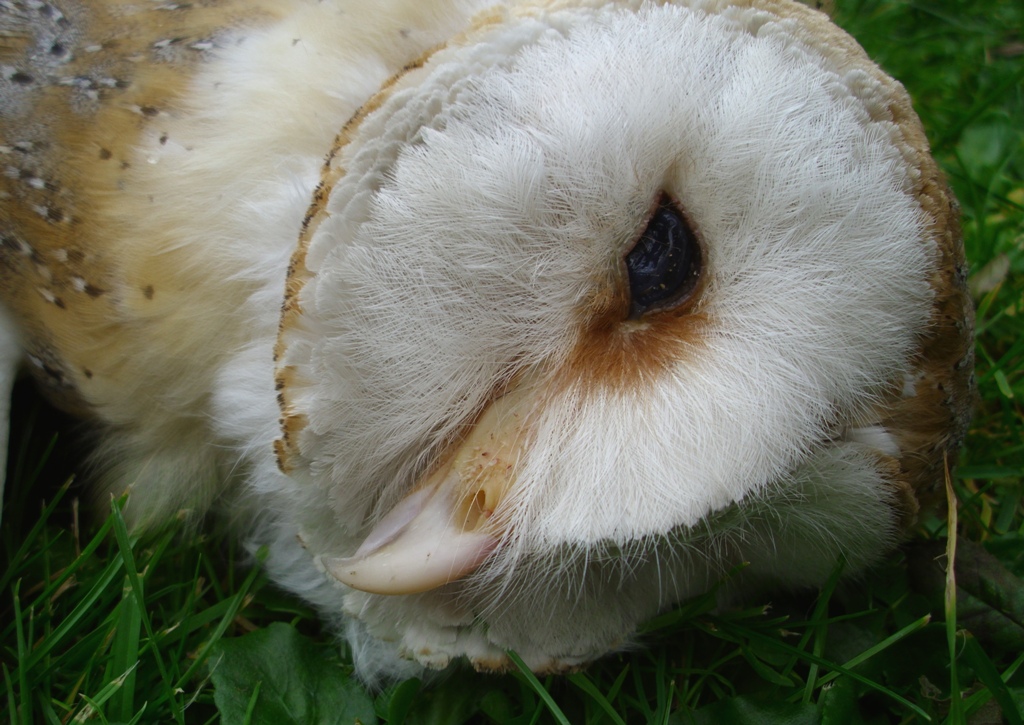
Wednesday - recovered this fresh Barn Owl casualty of the A1 westbound entrance slip at A720 junction, Old Craighall. 21 Barnacles went S over house.

Thursday - 4 ad Whoopers SE over Port Seton shops, also c. 875 Golden Plovers on the rocky shore at Long Craigs and ad Med Gull (unringed) by the burn. At Blindwells lots of Skylarks chasing around, some in song in the sunshine, also f/imm Shoveler and f/imm Gadwall still in with the 20 Wigeon. Chiffchaffs constantly calling.

Friday, 21 September 2012

Wknd 22-23 September

A few Bonxies heading in Forth on Friday afternoon and Saturday. All heading up mid-channel purposefully. Amazing to think these probably following a route followed for many generations, i.e. the Forth then overland to the west - though there is no apparent "way out" when entering perhaps they had taken the same route when younger or with other skuas and thus "know the way"? Also a steady stream of Red Admirals coming "in off" from Fife direction. Seen 99% of the summer's butterflies in the last 10 days - one small patch at The Dean, Longniddry, had 5 Small Torts, 5 Red Admiral, a Peacock and a Comma last weekend, also found a Small Tort in the house!

Also on Friday, 95 Canada Geese around East Fenton, no Whoopers back there. Passing Aberlady, one SEO hunting the salt marsh (reported here also 21/22 August). Later one road casualty SEO collected off A1 Blindwells (another tip off from Colin); tail feathers sufficient to identify as ad female (ad based on solid tip to central, female based on 3 good bars on both webs of upperside of outermost feather, see earlier male); also in moult with P7 less than half grown (see second last). En route had seen a meteor streaking down over Hoprig, apparently part of a wider influx. Wonder if the owl was too?

Sunday at Ferny Ness again but still no wind so no hope for seabird/vismig passage; nevertheless the glassy sea did enable a count of duck etc, at least 33 Red-necked Grebe in range (could not spot any Slavs or LTD) and initially perhaps a dozen Red-throated Diver but the latter were moving west and on next complete scan added up 25 on sea plus 3 W. Velvets went out to limits of visibility where clear water became shimmer but at least 380 in that range. A Bonxie went W but soon after presumed same E so perhaps milling around. 2 Barnacles tagged on behind Pinks passing W offshore, also a single f/imm Goldeneye SE and a f/imm Scaup NE past, latter not that common here over the sea.

Saturday, 15 September 2012

Wknd 15-16 September

These Canadas (and Curlew!) came out of Gosford Bay at dawn on Saturday, but pitched up on Longniddry beach and later flew back - the white-headed hybrid tells us they are the locals from Musselburgh. A Bonxie was amongst the Kittiwakes offshore and a few hirundines passing - absolutely no comparison with the hordes passing along the Fife coast opposite - proving again that Mipits etc prefer coasting especially if there is a bit of windy up and some haze offshore as per today.

162 Barwits and 41 Sanderling on shore amongst the throng of gulls. "Best" came last with a young Peregrine flushing the feeding Barwits off the shore then driving one into the sea - with each swoop the terrified Barwit splashed a few flaps along the surface of the water but never got airborne - after 5 attempts the Peregrine gave up and drifted off, the Barwit briefly remained swimming out on the sea like a strange brown gull then promptly flew back to the shore apparently unharmed.

Not much moving at Ferny Ness on Sunday morning, always worth it though to see the hirundine battling across Gosford Bay in the wind. Presumably same imm f Peregrine flushed off the point by a Kestrel as I arrived 07:30hrs, later spotted Mediterranean Gulls 3rd-win white-32A4 and an unringed 2nd-win amongst the feeding flock along the shore of Gosford Sands. House Martins are still in the nest on next-door neighbours!

WeBS in the afternoon produced very little, just a few wildfowl back, no waders! Wheatears were at Chapel (2) and Brownrigg (3), one shown here.

On way back a large gathering of geese was seen feeding in stubble near Lochhill farm, perhaps 3k+ in the area; amongst them a leucistic Pinkfoot first spotted by Abbie earlier in the day, perhaps a returning bird as we seem to get a few of them.