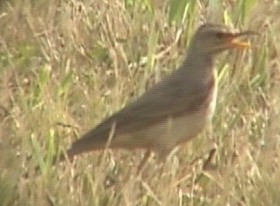
This is a log of the more interesting species and bird behaviours seen and heard in and from a suburban garden on Goodrich Close, Garston, Watford, Hertfordshire, England (map). The garden is in a large area of semi-detached and terraced former council housing. The nearest open ground is 500m to the north-west, and receding, the nearest patches of "wood" are at the Harebreaks Nature Reserve 500m south and in the cemetry half a mile to the east and the nearest open water is the Grand Union Canal/River Gade 1 mile to the west.
Annotated species list
Detailed records (spreadsheets)
2004
We finally moved out of the house on 6 August, with a Linnet over being the last bird of note. The same species was seen over our new garden in Longniddry, East Lothian, (375 miles north) later the same day. More info on the new garden in new log here.
On 2 August and finch-like passerine over high NE calling a bright high "chup" was almost certainly a Common Crossbill. Later a Hobby hurtled over the garden in pursuit of something.
The Sparrowhawk successfully grabbed one of the juv Starlings now at large in the area, 18 July.
Little Owl activity continued into July with bird calling at 03:30hrs and 05:00hrs on 3 July. A new record count of 35+ House Sparrows the same day - they seem to appreciate the allotment-like patches at the ends of gardens which have been left to run wild, either through negligence or in our case, deliberately.
28 mainly juv House Sparrows in our buddlea on 27 June was a very similar number to the 2001 mid-summer peak, suggesting that the population is healthy and stable.
Noisy Little Owl(s) again at 01:00hrs on both 3 and 4 June, and several other dates thereafter.
Robins have bred successfully yet again; found presumed nest in greenhouse under a shelf - right under my nose! Also, young Blue Tits at point of fledging on 27 May.
Good run continues with calling Little Owl at 03:30hrs on 5 May. Still never seen by day.
Another Common Buzzard over SW on 3 May - part of upsurge in records of this species (reminiscent of situation in my Scottish garden in 1990 as species expanded in numbers/range).
2 Common Buzzard thermalling high to N on 2 May was only second record of this species and perhaps migrants? Interesting that one was reportedover Regent's Park in central London the same day - definitely a migrant.
Swifts and House Martins back on 1 May, 14 of the latter.
Little Owl calling 1.40hrs on 23 April.
First ever spring Jay SW over on 12 April.
Blackbird in continuous battle over nest site in leylandii with marauding Magpie 10-12 April. Wren and Blue Tit both gathering moss off lawn for nests 10 April; but no Goldcrest this year.
For fourth spring in a row male Blackcap has taken up residence in garden, on 4 April. In previous years stayed between 1 day and 2 weeks between 23 March and 21 April.
Yet more Cormorants with singles on 4 April and 28 March.
Just over a year after first record of Song Thrush actually in the garden another was recorded, this time in song, on 3 April. Song is normally heard regularly during first half of year (see spreadsheets), but usually very remote. In addition, Mistle Thrush now heard in song daily from distant cemetry trees - perhaps "overlooked" in previous years as it's resident there.
Little Owl making noise again at 23.40hrs on 20 March after 15 week gap.
Early on 13 March a remarkable coincidence with a Great Spotted Woodpecker and a Cormorant in the same field of view flying S over our house, though the latter was at quite a height.
Fat female Blackcap perched in buddlea with Spuggies on 4 March - earliest record of this species here, which showed last year from 23 March but in previous years only in April and autumn.
On 10 February followed a Mute Swan in flight over the A405 about 2 miles from near my workplace to very near home, but just missed it from the garden.
A male Green Woodpecker feeding on our neighbour's lawn on 1 February was the first down in the gardens since one fed on our own lawn on 13 January 2000 - perhaps the same bird?
Only species of interest on my RSPB Big Garden Birdwatch was a Grey Heron, with Chaffinch unusually on peanut feeder with sparrows.
Single Rook back inspecting nests on 24 January.
240 Lapwing high over SE, 23 January - presumably having visited Leavesden airfield but none there an hour previously.
Magpie nest-building on 18 January.
A Blackbird was in full song at 2.50am on 11 January.
A good start to the new year with the first definite Stock Dove for the garden over W on 10 January - species 65 and number 6 on my target list.
2003
[Overview of the year 2003 - with reference to "Yearly comparisons" in linked spreadsheet
A total of 55 species were recorded with 7 new for the garden (Cormorant, Red Kite, Common Buzzard, Redshank, Sandwich Tern, Sand Martin and Little Owl). The last-mentioned was actually recorded in 8 weeks. The frequency of occurence of Sparrowhawk, Goldcrest and Coal Tit was significantly higher than in previous years with the last two species resident in autumn and Starlings reached a new autumn high of 400. Song Thrush and Chaffinch maintained their long term rise whilst House Sparrow numbers are holding up and stable (perhaps due to feeding). On the other hand, records of Skylark reached a new low as the airfield is developed, Herring Gull frequency was down, Goldfinch numbers were very low with no more than one seen and for the first time there were no Siskins at all.]
Pics of some obliging Fieldfares as we left for Christmas on 19 December. While we were away Waxwings turned up just around the corner!


Good numbers of both House Sparrow (30+) and Starlings (50+) visiting the garden at present. The songs of the latter are such a joy and I frequently contribute the characteristic high descending whistle to the medley and invariably get a mimiced response from the flock. They also always tip me off on the Sparrowhawk though I sometimes don't actually see it myself. They normally go up when the alarm is raised but if too late freeze and stay put - recently the hawk came in low on the owl bush where the flock were lurking keeping a low profile, just at the last minute doing a sudden 180 degree turn and plunging in to the sound of much squawking, but emerging empty-clawed. Here's a bird on the lookout and in song in our Leylandii:


More mutterings from the owl on 9 and 12 December.
Owl calling again at 3am on 7 December - for over two minutes continuous very close to the house; possible to hear softer barking sounds too - seems more appropriate for Barn Owl than Little Owl but surely the same bird. The plot thickens...
On both 29 November (1am) and 2 December (11pm) a loud commotion heard from a dense tree just by our house which, apart from a kind of shrieking noise, also had "kek-kek-kek" notes reminiscent of the Little Owl. On latter date may have been two individuals and I wonder if they are using the tree as a roost. A mystery on our very doorstep!
3 Canada Geese low SW directly over on 15 November - first since September 2002.
5 Lapwing high SW at dusk on 1 November - perhaps from Leavesden airfield.
As seen in previous years flocks of Fieldfares progressing steadily west observed "falling out of the sky" as they spotted our local berry bushes - 24 over on 25 October. Later, a single Curlew SW over Leavesden Airfield, viewed from my car not far from home, would probably have been visible from our garden.
Grey Wagtail, Great Spotted Woodpecker and Jay on 21 October.
First Fieldfare on 20 October coincided with a general arrival in the area.
Little Owl very vocal again at 1am on 15 October - first record since June.
Kestrel low over directly SE on 11 October.
On 9 October a large-ish raptor was glimpsed as it passed low west, but into the sun and then immediately hidden from view; most likely just a Common Buzzard but could not exclude a harrier sp - "one that got away" :(
First Redwing over on 6 October. Starlings reached 400. This is the most I've seen here, but the history books record a roost of a million individuals at nearby Abbotts Langley in 1974!
Significant westerly Wood Pigeon passage commenced on 4 October; in more careful observation of local movements at dawn and dusk have found numbers of over 500 birds per hour (NE at dawn, reverse at dusk - presumably birds from Whippendell Woods area moving out into fields N of M25 to feed during the day); these counts now included in spreadsheets on this site as hourly rates in red font.
On 1 October 2 Jays visited our oak tree to stock up on acorns. Followed a nut-carrying Rook (see below) to an area at edge of Leavesden airfield 850m west of the walnut tree where 35+ corvids were gathered. One bird placed a nut on the roadway but removed it when a vehicle came into sight, so it seems they are taking the nuts there to break on the road and perhaps cache nearby.
On 30 September more Swallows through low SW following the autumn's fouth decent group of House Martins through yesterday. The Jay removed a crop-full of acorns from the tiny oak at the foot of our garden. The area's now heaving with Starlings, over 300 present, and fine sight of 200 mobbing the poor local juv Sparrowhawk.
Over last few days Rooks have been seen flying over toward Leavesden airfield carrying round objects in their beaks; on 27 September traced the origin to a walnut tree on the local rec (opposite end from the nests depicted below) - several birds were gathered busy trying to break into collected nuts in "Nuthatch fashion" with nut held by the feet; those seen dispersing with nuts in their beaks are presumably caching them for the winter ahead. BWP does list walnut as a locally important food source. Perhaps of interest here is the fact that each round trip to the airfield must be over 1000m, probably nearer 2km; considering the energy expended in such a trip, the walnut must indeed be highly prized!


First Jay of the autumn on 24 September, with Meadow Pipits and Linnet over.
A delightful addition to our avifauna over past 3 months (i.e. postbreeding) has been Coal Tit - formerly a very scarce visitor, but a family now seen daily.
On 22 September one of our regular Chiffchaffs heard calling with a down-slurred disyllabic call. Though this type of call is given by eastern (and Iberian) Chiffchaff races/species, an alternative explanation is that it's a first-year bird "finding its voice"...
On 19 September (on returning home from the hospital after birth of our first child!) was delighted to hear the unmistakable calls of a group of Sandwich Terns heading south over our house at 11.15pm - species 64 for the garden and a good record for Herts! [NB - the following day, this species suddenly cropped up at various inland locations including Stewartby (Beds), Walthamstow Resrs (N London) and Wentworth (S Yorks)]
First Great Spotted Woodpecker of the autumn on 14 September.
On 13 September Sand Martin was added to the garden list - species 62 - with a single over south. Returning home in the afternoon with a new pair of (2nd hand) bins was first able to test the short focus on our regular returning Chiffchaff, just arrived, then whilst watching hawking hirundines to the north picked up a Common Buzzard thermalling high up - species 63 for the garden and the first on my target list!
30 August continued the good trend for raptors with the 5th Sparrowhawk for the week and distant Kestrel over airfield.
On 25 August a late Swift popped up and a couple of minutes later the first Swallow of the autumn swept past confirming that it was part of a southerly movement.
21 mainly juv House Sparrow in our buddlea on 20 August was the peak summer count, but almost exactly half of our summer peak in year 2000.
Species 2 on my target list fell on 12 August with a Red Kite thermalling high over Leavesden Airfield to the north - species 61 for the garden. I obtained this record shot:


The insect equivalent of a raptor, a Common aeshna (Hawker/Dragonfly) buzzed the butterflies on our buddlea this evening (6 August).
On 3 August 22 Common Swifts gathered high over our garden to say farewell after another good breeding season. [Later, on 16 August, 7 more were seen, but presumably of more northerly origin].
Butterfly numbers have steadily increased since our buddlea bloomed in late June. It's now nearly finished but 25+ butterflies on it today (2 August) - most of Small Tortoiseshell but 6 Painted Lady's. Attracted one Dragonfly (Common Sympetrum).
Green Woodpecker calling 26 July - third record following one on 9 August last year and one January 2000.
Excited to record my first ever flock of Mistle Thrushes for this garden - in flight over on 19 July! A common garden species in many areas, but round here is apparently very reluctant to wander as I know of regular resident birds in many more open areas nearby (as close as 500m east).
At 2am on 10 July the melancholy call of a Redshank rang out as a bird moved SE over our house - species 60 for the garden and number 38 on my recent target list!
On 5 July there were 150+ Summer Chafers in sight and managed to catch one:


The now familiar voice of the Little Owl heard during heavy rain 1.30am on 30 June.
I don't know much about insects but could not help but notice 50-100 Summer Chafers buzzing high round the conifers in our garden - late June (originally identified as Cockchafers!).
Skylark in song over airfield on 27 June - but will we hear it next year after further development there?
The first returning Black-headed Gull was very early on 20 June. The autumn passage begins!
First family parties of Long-tailed, Great and Blue Tits through on 6 June.
Little Owl calling again just after midnight on 4 June. Found another recording for this species on Northamptonshire Wildlife Sound Gallery (in addition to my Collins Bird Song CD and Birdguides CD) including an "alarm" which is an exact match - therefore Little Owl now becomes a definite, though somewhat unexpected, new bird for the garden - species 59! Prepared a revised target list of the birds needed for 100 species...
Purple Heron?
"Left home before 4am on 31 May to see if I could track down the owl at the local Harebreaks Nature Reserve 300m to the south of our house on the other side of the A41. No luck, but found a mural there by local schoolchildren illustrating the reserve inhabitants including Tawny and Little Owls and also Linnet, Great Spotted and Green Woodpeckers and Nuthatch. This must be accurate as the last four species were there alright, but no owls!
Whilst waiting for the House Sparrows to awaken so that I could commence my BTO tetrad survey I was sitting at the edge of the Leggatts campus playing field when I was alerted by an unsual harsh call "wrrech" at 4.22am. Hoping for an owl, I looked up to see a heron species moving WNW at c. 30m altitude. Though the light was not brilliant it appeared all dark and it did not have the usual jizz of a Grey Heron. It called again one more time before I lost sight of it, and the call seemed rather higher pitched than that of Grey Heron and less "heavy". Moreover, in the brief view that I had I particularly noted that the neck shape looked off for Grey Heron too as the keel seemed to jut forward in a distinctive angular fashion. Unaware of the real significance of this, and of the rather different call, but aware that the bird I'd just seen did not seem to be a Grey Heron, I headed for home to check my field guide. This only seemed to confirm my suspicions - it was surely a Purple Heron - and I realised that with lack of a proper plumage description this one was destined to be another great bird "that got away". I checked out the local Grove Mill to no avail, but being a skulking species that was not great surprise. I later headed for the Tring reservoirs, but there's a lot of reedbed there to hide in. Let's hope it turns up somewhere else soon!"
NB - this individual would have been visible from our garden and would have supplanted Serin as the best bird on our garden list!
Postscript: a Purple Heron was reported from Ditchford, a pit by the Nene N of Rushden at 11.30 am the same morning. Ditchford lies about 50 miles NNW of where I saw the bird...
Rooks feeding juveniles on local playing fields on 30 May - probably from nests shown below.
Owl calling "kip-kip-kip" again 12.30am on 30 May. The more I hear it the less I can imagine that it is a Tawny and if it's Little it seems odd that it does not employ any call other than alarm. However, I wonder if it has been attracted by the persistent night-time calling of our neighbour's Cockatiel...
The owl was calling again at 11pm on 28 May, this time from right outside the house and glimpsed in flight. Call a loud "kip, kip, kip" repeated three times from a perch, pure in tone, of intermediate pitch (much lower than GSW but similarly loud) with last syllable a fraction lower, still seems to best match Little Owl!
A couple of Grey Herons over N on 10 May was the first "flock" of this species seen.
Another Cormorant flew over E at 6am on 9 May.
An owl species was heard at 1am on 27 April "kvik kvik kvik kvik" (cf 23 March entry), again sounding rather like Little Owl!
Female Blackcap in ivy berry bush 21 April - first female seen in garden - but male now gone.
The first Swallow showed up on the same Saturday as last year - 19 April. Delighted to find our Collared Doves (below) building a nest in the pine immediately outside our front door!


Wren and Goldcrest also seem to be breeding locally and present daily. Rooks are still incubating on three nests nearby:

Last sighting of the male Blackcap was on 5 April. First overhead Linnet of the spring today, later than usual.
A Song Thrush bathing in our pond on 26 March (amongst the frog spawn) was the first seen actually in the garden since we moved in over 3 years ago!
re the Blackcap (re)found on 23 March (below) - it's the bush - bird seen munching abundant ivy berries there (26 March). The same individual exploiting a favoured food source may therefore be responsible for the spring sightings in the last three years and records of singing males on 6 October 2001 and 3 July 2002.
At 11pm on 23 March a loud "kick k-vick ... kick kick kick kick" call was heard from a bird moving west overhead - most likely a Tawny Owl, but Little Owl alarm call could not be ruled out...
On 23 March a male Blackcap sang from the same bush where one held territory in the 2nd week of April 2001. Could this be the same bird, which showed last year only on 21 April, or is it just a good bush?
First northward-bound Meadow Pipits of the spring over on 15 March - the same Saturday as last year.
30 Redwings E on 3 March the first evidence of a return passage.
On 1 March Rooks were back at the small rookery we can see from our front window - consisting of only three nests in one tree!
On 15 February, a female Kestrel directly over the house was the first since autumn 2001. Our resident pair of Magpies cached a plate peanuts by burying them in the ground.
The most interesting observations during early February were bird behaviour associated with the hard weather (snow) - the Wood Pigeon sitting on our bird table eating bread (7/2) and the Magpie caching a piece of bread by carefully burying it in the snow (1/2). Not sure how common either of these behaviours is...
One-hour of intensive garden watching for the RSPB's Big Garden Birdwatch on 26 January produced rather better counts of many species than I log during a normal week. Nothing very exciting in the garden, but 18 House Sparrow was the best count for a while and Goldcrest and 7 Redwing were logged. Overhead, gulls over towards the Hilfield roost (see my local patches page) included 320 Black-headed, 12 Common, 9 Lesser Blackback and a (probable) Yellow-legged.
On Saturday 25 January was able to count Lapwing flock on the nearby disused airfield on the ground and found 195 individuals.
Our male Blackbird joined the distant Song Thrush in full song at dawn, as of 23 January.
175 Lapwings over Leavesden airfield on 17 January - first big flock since 21 January 2000, but still no associated Golden Plover! Magpie busy nest-building.
The latest interesting visitor was not a bird as the following picture sequence shows (click on an image for a larger version):


We have seen red foxes before, as solitary animals roving the streets at night. This presumed pair were seen early on the morning of 11 January and remained in situ for over an hour. It was very cold and they appeared to be sunbathing. The spot where they were lurking is the end of a neighbour's garden (see the cloths-pegs in the foreground!), about 60m from the house, but the group of gardens of which ours is a part are completely surrounded by houses and busy families. So it seems quite surprising that they were bold enough to come out like this as there is no significant cover in the area. The presumed male had a bad open scar on his back, but this did not appear to be worrying him.
A Song Thrush was heard singing distantly at dawn on 3 January.
2002
[Overview of the year 2002 - with reference to "Yearly comparisons" in linked spreadsheet
A total of 53 species were recorded with 6 new for the garden (Greylag, Mallard, Nuthatch, Mistle Thrush, Brambling and Crossbill). It was a good year for Grey Wagtail and Meadow Pipit passage was also decent. ]
30 December was a good day despite constant rain with, appropriately, a Cormorant over N - a long anticipated first for this garden! In addition, Lapwings were again seen over the airfield and 80 Rooks passed over from the same location in a roost flock. Our male Blackbird was heard twice in full song, in the pouring rain, at midday. A small flock of Redwings still present and very visible circling the area.
Low coverage recently due to business travelling but plenty of thrushes moving - Redwings E in small flocks at over 200 birds per hour on 14 December. Also 20 Lapwings over the disused airfield to the N.
Unlike Redwings which are present daily on any red berries, Fieldfares are less regular, so 40 over E in two flocks on 23 November were noteworthy.
Away in Nigeria 8-18 November during which time compiled a garden bird list for my wife's families "compound" (Annotated species list).
A Nuthatch heard calling at 6.50am on the 4 November was the first for the garden.
On the first of November a small flock of Bramblings flew over W - the first for the garden.
Late October was uneventful but coverage low. Usual influx of Redwings and Blackbirds present daily feasting on red berry crop.
On 18 October 10 Siskins dropped in to feed on birch catkins.
Redwings were back on 10 October, 3 days earlier than last year.
Migrant Grey Wagtails have been seen on a couple of occasions in the last month but always high overhead, so it was interesting to note a single descending to the small playing field 100m E of our house on 30 September. As far as I know, there is are no streams or large ponds in our neighbourhood which might have attracted this bird (there are none on the playing fields anyway) so this must just have been a passing migrant calling in.
After several sightings of single Chiffchaffs from 31 August onwards, two individuals were present in our garden on 29 September, one of which revealed itself to be a male by singing a few times (though conditions were overcast and misty). All sightings have been in company of tit flocks.
Migrants over the weekend of 14-15 September included at least 6 parties of Meadow Pipits and a few more Swallows. A distant Mistle Thrush was the first record (since our arrival in January 2000).
36 Canada Geese low NE directly over our house on 13 September were only second record of this species.
In view of the current irruption of Common Crossbills this species was an eagerly anticipated addition to the garden list. Following a week of intense coverage (due to changing cylinder head gasket on car outside) finally picked up a small flock of these wonderful birds high SW over our house on morning of 8 September!
Things began to liven up a bit into the first week of September with the first Jay of the autumn (31 August), a record 17 Blue Tits through with other tit species and another Grey Wagtail. The first migrant Swallow, a juv which perched on wires outside our house on 5 September (in the same place as last year) was scared off after 5 minutes by a Hobby which whizzed just over its head at a considerable rate of knots!
On the anniversary of our Serin record, spent a few hours in the garden but noted little of interest except a single Grey Wagtail high over to the south. The first Great Spotted Woodpecker of the autumn was recorded the following day (27 August).
The first real migrants of the autumn were 14 Meadow Pipits over due south on Monday 12 August.
A Green Woodpecker was heard calling on Friday 9 August.
The first returning Black-headed Gull was seen on 9 July.
A singing Blackcap on 3 July must have finished breeding, as the species does not breed in our estate.
May and June were very quiet, save for breeding activity, with young Hedge Sparrow, Robin, Blackbird, Blue Tit, Magpie, Carrion Crow, Starling and House Sparrow all present in the garden, and Rooks also breeding locally (in nests in isolated trees). Regarding changes, it is noticeable that Common Swift have had a good breeding season which much more birds around than last year, but House Sparrow are less numerous.
Swallow and Blackcap were logged the weekend of 20-21 April with Common Swift the following weekend.
The first sightings of Greylag Goose and Mallard for the garden were logged in March and April.
The first real migrants of the spring were Meadow Pipits over due north on Saturday 16 March.
With mild weather conditions prevailing in January, preparations for the breeding season got underway early - Song Thrush regularly in song since 19 January, and on 26 January (during the "Big Garden Birdwatch") Skylark seen in song flight 1/2 km to the north and Magpies nest-building (quickly blown away!).
Following the provision of a regular food supply of seeds and nuts from New Year a large increase in the number of birds actually using the garden was observed - an overall increase in numbers by a factor of 3, but a factor of about 10 or more for House Sparrow, Hedge Sparrow and Great Tit and as time progressed, also Collared Dove and Wood Pigeon which were attracted to the spilt seeds. This spreadsheet (requires MS Excel) provides full details of birds recorded in the garden according to the rules of the BTO's "Garden Birdwatch" scheme - showing in detail the effect of feeding.
2001
[Overview of the year 2001 - with reference to "Yearly comparisons" in linked spreadsheet
A total of 49 species were recorded with 11 new for the garden. It was a good year for Great Spotted Woodpeckers but Song Thrush numbers were low. The highlight was a brief Serin. ]
14 passing Fieldfare fell out of the sky to spend one minute feeding on rowan berries on 2 November and a Grey Wagtail flew over on 3 November (first record).
On 29 October, a clear but cold day, Wood Pigeons were observed passing SW in a nearly constant stream, mostly in small flocks (10-20 individuals). Over 650 birds were counted in 30 minutes of observation.
An extremely late Common Redstart was present on 24 October calling in our tiny front garden (first record)!
Purple patch during misty conditions on 13 October 7.45-9.00am saw a total of 26 species, including migrants: 2 Fieldfare and 4 Redwing S, 6 Meadow Pipit, 6 Goldfinch, Siskin and 120 Wood Pigeon.
Several migrant Meadow Pipits, Swallows and House Martins were seen in September and October. A Blackcap was in song on 6 October.
The first Jay of the autumn was seen on 20 September.
Chiffchaff passed through with tit flock including Long-tailed, Great and Blue on 7 September.
A Serin was heard calling to NW (in the vicinity of the tallest tree in the area, a birch) at 9.30am on 26 August and soon after seen flying over in bouncing erratic flight (cf. Linnet or Siskin) flying off to the NE, calling (singly at short intervals) "tzzuuupp". This small continental finch species has only been recorded in Hertfordshire on a handful of occasions. A male of the species, most likely the same bird, was seen in Watford town centre on the following Wednesday.8 Canada Geese were seen flying NW on the same date (also a first record).
The first Great Spotted Woodpecker of the autumn was heard calling on 13 August.
10+ Long-tailed Tits passed through the garden twice in early August, with Blue Tits and Great Tits.
A Hobby whizzed through the garden just below the "treeline" on 28 July (first record) and a flock of 100 Black-headed Gulls flew over towards the local roost (Hilfield - see my local patches page) at 8pm on 31 July.
House Sparrows had a good breeding season with the second brood at large during 2nd week of June.
During May, the Skylark was heard in song over airfield and Song Thrush also heard singing distantly when conditions were still. A slowworm was seen.
On 11 April a male Blackcap took up residence in the garden, and was heard singing (and seen eating ivy berries) until 14 April. Linnets were seen on several occasions in April.
A Chiffchaff was in song on 24 March.
During January up to 8 Redwings were frequently seen. Magpies were obvious with 11 together on 20 January
2000
Several Goldcrests, Jays and a migrant Meadow Pipit were seen in September/October.
Between July and September 10+ Long-tailed Tits moved through the garden on a number of occasions, usually in company of other species.
House Sparrows had a good breeding season and 35 individuals in our buddlea on 13 August included only a single adult male.
The first Black-headed Gull was back on 8 July.
The first Common Swift was seen on 6 May.
A Skylark was heard in song over airfield to N at the end of April.
170 Lapwings were seen over the airfield to the N on 21 January.
6 Linnet were seen feeding on the path opposite front of our house and a Green Woodpecker was feeding on our lawn on 13 January.